GSM LogoAboutCivil Logo Cross construction of drains, underground drainage & channels, cross drains

Civil Engineering Hydraulic Structures Cross Drainage Works - Construction of Cross drains & Underground Channels


Cross drainage works

Advertisements

Definition:

A cross drainage work is a structure carrying the discharge from a natural stream across a canal intercepting the stream.

Canal comes across obstructions like rivers, natural drains and other canals.

The various types of structures that are built to carry the canal water across the above mentioned obstructions or vice versa are called cross drainage works.

CONSUMPTIVE USE OF WATER
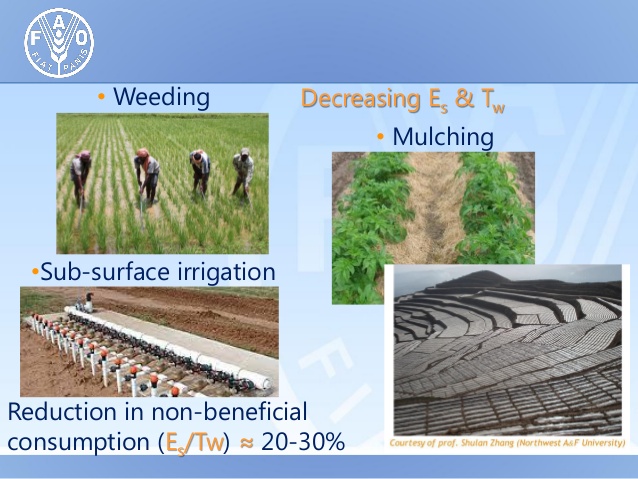
It is the quantity of water used by the vegetation growth of a given area.
Mathematically,
Consumptive Use = Evapotranspiration = Evaporation + transpiration It is expressed in terms of depth of water.
FACTORS AFFECTIING THE CONSUMPTIVE USE OF WATER
Consumptive use varies with,
1. Evaporation which depends on humidity.
2. Mean Monthly temperature.
3. Growing season of crops and cropping pattern.
4. Monthly precipitation in area.
5. Wind velocity in locality.
6. Soil and topography.
7. Irrigation practices and method of irrigation.
8. Sunlight hours.
TYPES OF CONSUMPTIVE USE
Following are the types of consumptive use,
1. Optimum Consumptive Use
2. Potential Consumptive Use
3. Seasonal Consumptive Use
1. Optimum Consumptive Use:
It is the consumptive use which produces a maximum crop yield. 
2. Potential Consumptive Use:
If sufficient moisture is always available to completely meet the needs of vegetation fully covering the entire area then resulting evapotranspiration is known as Potential Consumptive Use.
3. Seasonal Consumptive Use:
The total amount of water used in the evapotranspiration by a cropped area during the entire growing season.
METHODS OF ESTIMATION OF CONSUMPTIVE USE:
For the estimation of consumptive use there are two main methods,
1. Direct Methods/Field Methods
2. Empirical Methods
1. Direct Methods:
In this method field observations are made and physical model is used for this purpose. This includes,
(i) Vapour Transfer Method/Soil Moisture Studies
(ii) Field Plot Method
(iii) Tanks and Lysimeter
(iv) Integration Method/Summation Method
(v) Irrigation Method
(vi) Inflow Outflow Method
(i) Vapour Transfer Method:
In this method, soil moisture measurements are taken before and after each irrigation. The quantity of water extracted per day from soil is computed for each period. A curve is drawn by plotting the rate of use against time and from this curve, the seasonal use can be estimated. This method is suitable in those areas where soil is fairly uniform and ground water is deep enough so that it does not affect the fluctuations in the soil moisture within the root zone of the soil.
It is expressed in terms of volume i.e. Acre-feet or Hectare-meter
(ii) Field Plot Method:
We select a representative plot of area and the accuracy depends upon the representativeness of plot (cropping intensity, exposure etc).It replicates the conditions of an actual sample field (field plot). Less seepage should be there.
Inflow + Rain + Outflow = Evapotranspiration
The drawback in this method is that lateral movement of water takes place although more representative to field condition. Also some correction has to be applied for deep percolation as it cannot be ascertained in the field.
(iii) Tanks and Lysimeter:
Compiled luhammad Farooq Zia (2005-CE-44) 
In this method, a watertight tank of cylindrical shape having diameter 2m and depth about 3m is placed vertically on the ground. The tank is filled with sample of soil. The bottom of the tank consists of a sand layer and a pan for collecting the surplus water. The plants grown in the Lysimeter should be the same as in the surrounding field. The consumptive use of water is estimated by measuring the amount of water required for the satisfactory growth of the plants within the tanks. Consumptive use of water is given by,
Cu=Wa-Wd
Where,
Cu=Consuptive use of water Wa=Water Applied Wd=Water drained off
Lysimeter studies are time consuming and expensive. Methods 1 and 2 are the more reliable methods as compare to this method.
(iv) I ntegration Method:
In this method, it is necessary to know the division of total area, i.e. under irrigated crops, natural native vegetation area, water surface area and bare land area.
In this method, annual consumptive use for the whole area is found in terms of volume. It is expressed in Acre feet or Hectare meter.
Mathematically,
Total Evapotranspiration=Total consumptive usexTotal Area Annual Consumptive Use=Total Evapotranspiration=A+B+C+D Where,
A=Unit consumptive use for each cropxits area B=Unit consumptive use of native vegetation xits area C=Water surface evaporationxits area D=Bare land evaporationxits area
(v) Irrigation Method:
In this method, unit consumption is multiplied by some factor. The multiplication values depend upon the type of crops in certain area.
This method requires an Engineer judgment as these factors are to be investigated by the Engineers of certain area.
(vi) Inflow Outflow Method:
In this method annual consumptive use is found for large areas. If U is the valley consumptive use its value is given by,
U = (I+P) + (Gs - Ge) - R Where,
U = Valley consumptive use (in acre feet or hectare meter)
I = Total inflow during a year
P = Yearly precipitation on valley floor
Gs = Ground Storage at the beginning of the year
Ge = Ground Storage at the end of the year
R = Yearly Outflow
All the above volumes are measured in acre-feet or hectare-meter.
Compiled luhammad Farooq Zia (2005-CE-44) 
2. Empirical Methods:
Empirical equations are given for the estimation of water requirement. These are,
(i) Lowry Johnson Method:
The equation for this method is,
U = 0.0015 H + 0.9 (Over specified)
U= Consumptive Use
H = Accumulated degree days during the growing season computed from maximum temperature above 32 °F
(ii) Penman Equation:
According to this method,
U = ET = AH+0.27 EaA- 0.27
ET = Evapotranspiration or consumptive use in mm Ea = Evaporation (mm/day)
H = Daily head budget at surface (mm/day)
H is a function of radiation, sunshine hours, wind speed, vapour pressure and other climatic factors.
A = Slope of saturated vapour pressure curve of air at absolute temperature in °F
(iii) Hargreave’s Method:
It is a very simple method. According to this method,
Cu=KEp
Where,
Cu = Consumptive Use coefficient (varies from crop to crop)
Ep = Evapotranspiration K = Coefficient
SJ Logo Site Map | Civil Engineering Training | Contact Us | Advertise with Us | © 2013 WebTechTix